Staging notes
How to dress a room with real items, step by step
A considered room starts with a plan. Follow this living room from an empty space to a styling concept and a shopping board, then learn how to bring the look home.
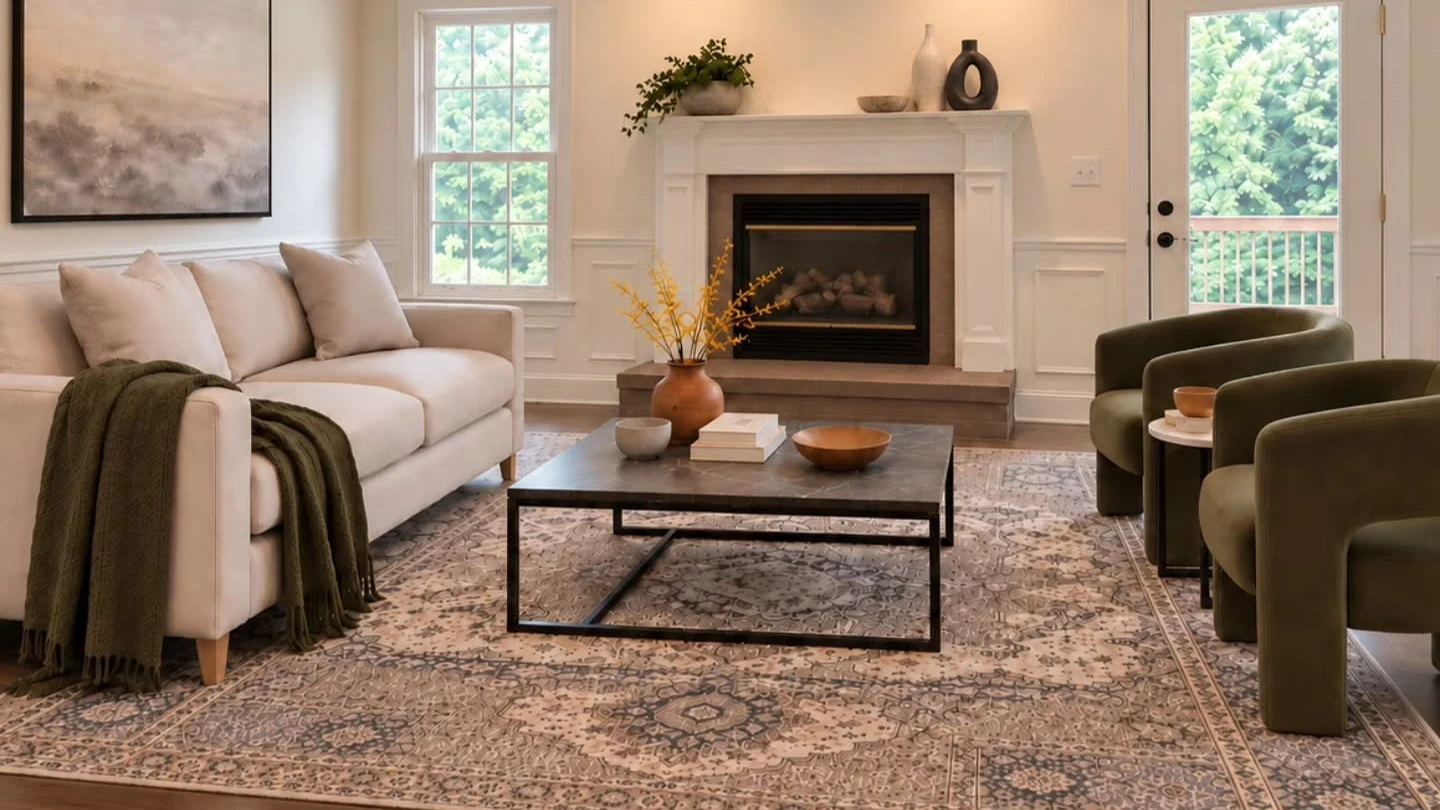
To dress a room with real items, start with how the space needs to work. The sofa, rug, tables, artwork, and smaller objects should support that plan. Buying each piece because it looks good on its own can leave you with a room that feels crowded or disconnected.
This living room from our Instagram carousel shows the connection between a room concept and a shopping board. A cream sofa gives the room a quiet base. Olive chairs and a throw repeat one accent color. A patterned rug gathers the seating together, while a dark coffee table adds definition. Here is how to translate that kind of idea into an actual room, one decision at a time.
1. Read the room before you shop
Start with the fixed features: windows, doors, fireplace, flooring, and the routes people use to move through the space. In this example, the fireplace gives the seating area a natural focus, but the glazed door also needs a clear approach. An attractive arrangement still has to let someone walk outside comfortably.
Measure the room and draw a simple floor plan. Mark door swings, outlets, and anything that furniture must not obstruct. Photograph the space from more than one corner. A single picture can hide a narrow passage or make a wall seem longer than it is.
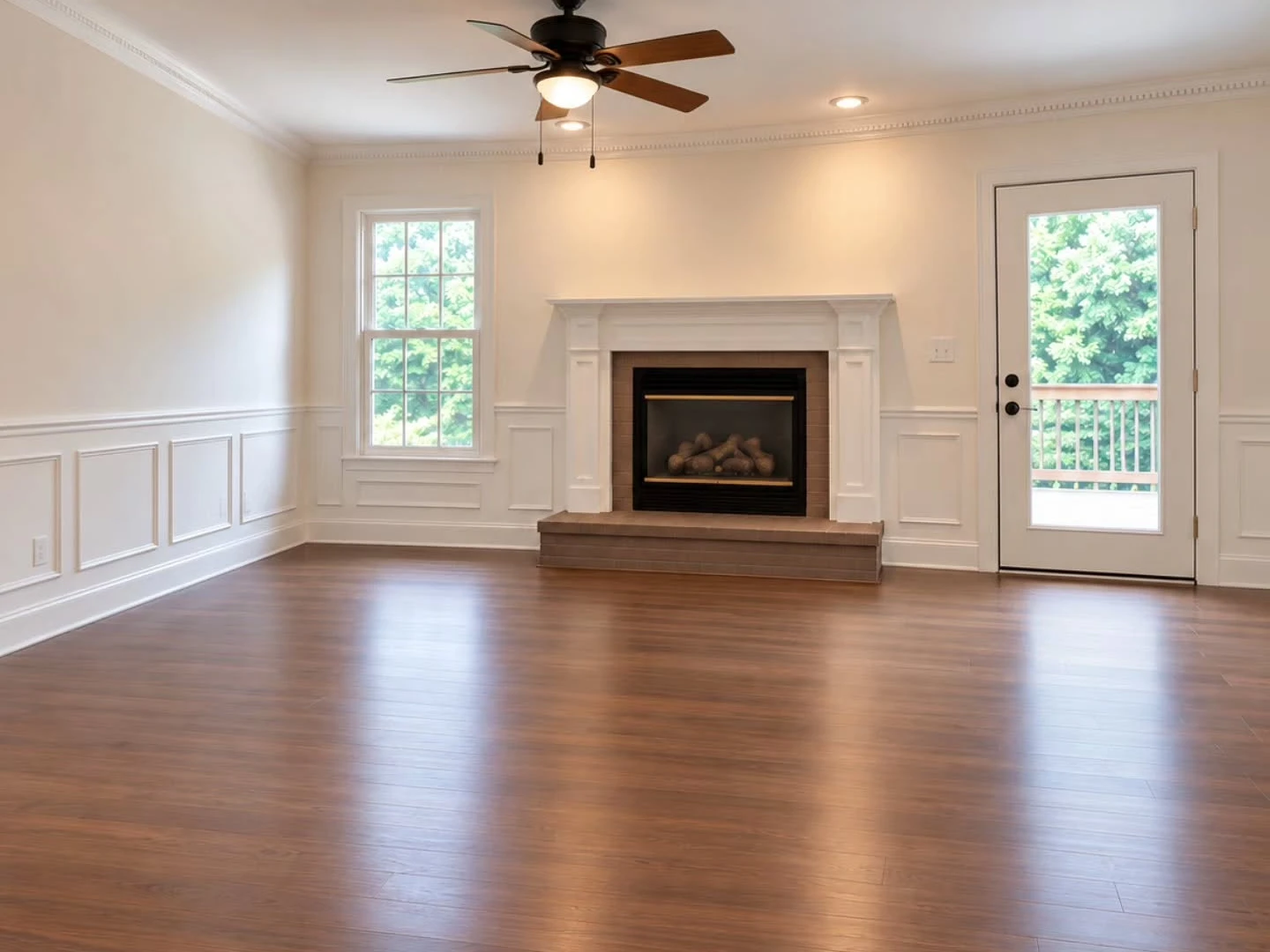
Decide what you actually need here. Is this a room for conversation, reading, watching television, or a mix? List the pieces you already own that can do those jobs. Dressing a room does not have to mean replacing everything. A good existing sofa may only need a better layout and a few supporting pieces.
2. Set the layout with the largest pieces
Place the sofa first on your plan, then test where the chairs belong. The concept pairs a sofa with two curved armchairs, making a clear conversation area. That is a useful starting point, but your room may work better with one chair and more open floor space.
Use painter's tape to mark the furniture footprints before ordering. Walk around them, open the doors, and imagine someone sitting down while another person passes behind. Include the coffee table in this test. Leave room to reach it comfortably without squeezing between it and the seating.
Check the dimensions of the actual products, including depth and arm height. Two sofas described as three-seaters can take up very different amounts of space. Also measure the delivery route, including doorways and tight turns. A piece needs to reach the room as well as fit inside it.
3. Choose a small palette, then vary the materials
The palette here is warm and restrained: cream upholstery, olive accents, brown wood, and darker details. Repeating the olive in the chairs and throw makes those pieces feel connected without requiring every object to match.
Texture gives a quiet palette interest. The soft upholstery, woven throw, patterned rug, smooth table, and ceramic accessories each contribute something different. Before buying, gather fabric and finish samples where possible. Look at them together in the room during daylight and in the evening. A color on a screen is only a starting reference.
Let the largest purchases carry colors you will be comfortable living with. Smaller textiles and objects are easier to change later. If you already have a patterned rug, borrow a color from it instead of introducing several unrelated accents.
4. Turn the concept into a working shopping list
The shopping board breaks the room down into individual decisions: sofa, armchairs, coffee table, side table, rug, artwork, throw, and mantel accessories. This is the bridge between liking a picture and knowing what you need to source.
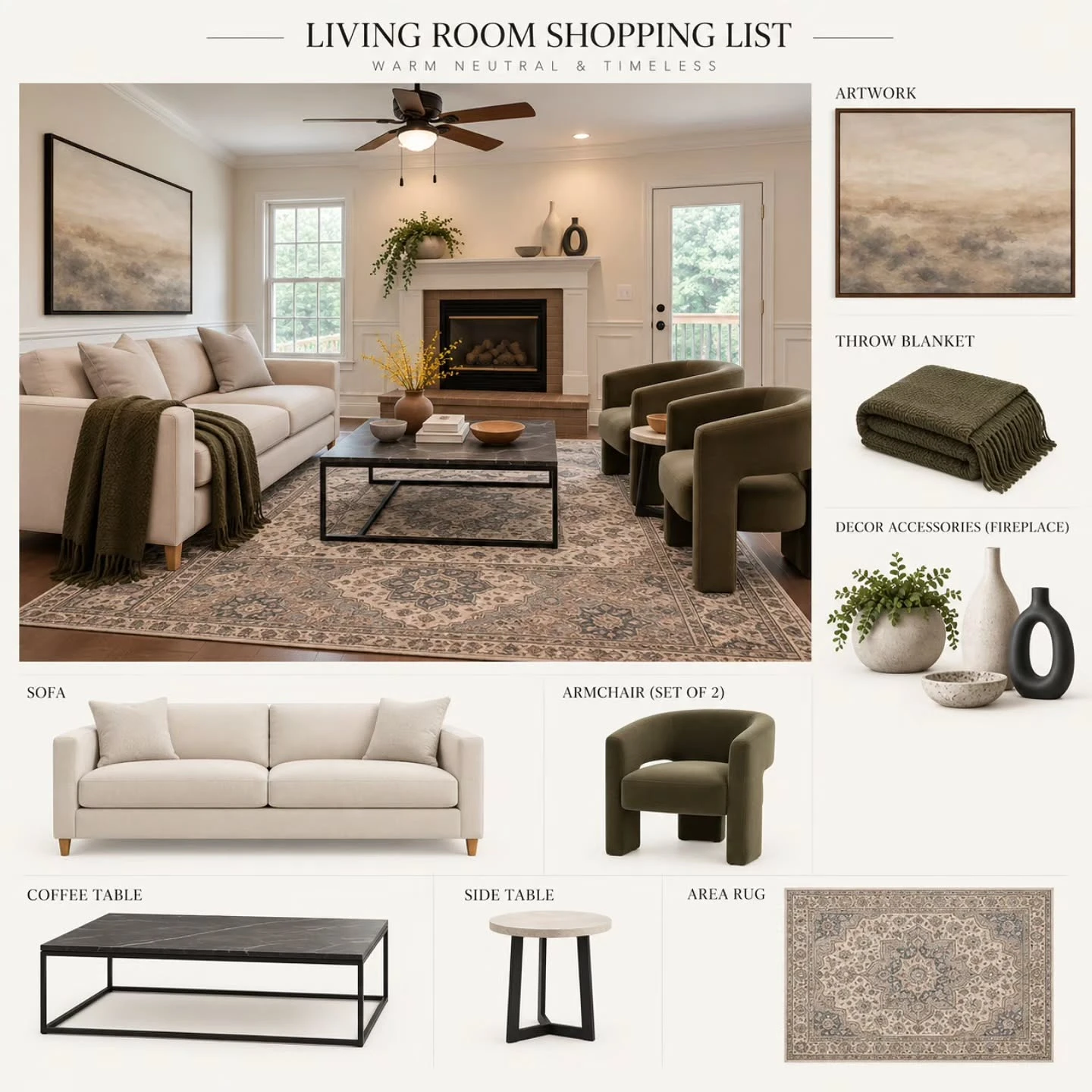
For each item, record the dimensions, finish, quantity, cost, delivery timing, and return terms. Mark whether you will keep something you own, move a piece from another room, or buy it. Prioritize seating and the rug before spending the remaining budget on decorative objects.
The board is a visual guide; it does not provide verified retailer details or current availability. For the shopping list associated with this design, message Set & Style on Instagram. Confirm the exact size and finish before ordering. If a piece is unavailable, look for a replacement with the same purpose, proportion, and color rather than choosing solely by resemblance.
5. Add the layers in a useful order
Once the main pieces are in place, position the rug so the seating reads as a group. Then add tables where someone can actually put down a drink or a book. Check the room from seated height as well as from the doorway.
Artwork should relate to the furniture below it. In this concept, a large, quiet landscape anchors the wall above the sofa. Before making holes, use a paper template to test the size and placement. Think about lighting at this stage too: the room should work in the evening, including wherever you expect to read.
Finish with the smaller pieces. A throw softens the sofa. Books and a bowl give the coffee table a little variation while leaving usable surface space. The mantel groups objects of different heights with open space around them. You do not need to fill every gap for the room to feel finished.
6. Live with the arrangement, then edit
Walk through the room again and sit in every seat. Can you reach a table? Does a chair interrupt the route to the door? Does the room feel comfortable when more than one person uses it? Move or remove anything that gets in the way.
Take a fresh photograph and compare it with your plan. If one corner feels busy, try taking something away before buying another accessory. The final room does not need to copy the reference exactly. It needs to work with your measurements, your existing pieces, and your everyday routines.
If you are preparing a home for sale, keep the difference between a concept and an installed room clear. A digitally staged image shows a possibility; physical styling changes what visitors experience. Our guide to photo staging and physical staging explains the two approaches.
Want to explore a direction for your own space? Start your digital staging request with a clear room photo. Your first photo is free. A visual starting point can help you see which layout and styling decisions deserve attention before you begin buying real items.